Pack Light Every Trip: Minimalist Digital Packing Planner
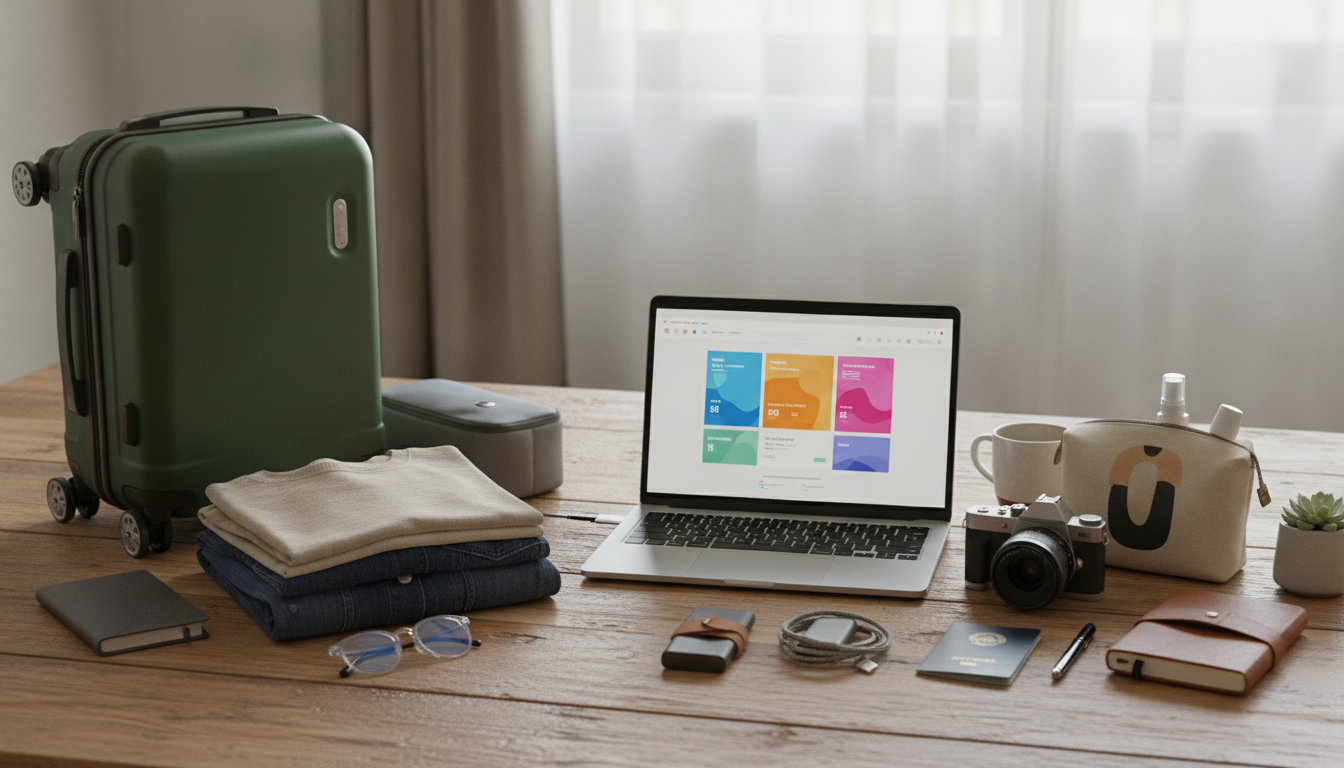
Minimalist Travel Packing Planner: A Digital Guide for Light, Smart, Stress-Free Trips
Packing light gets easier when decisions are made before the suitcase opens. A minimalist approach focuses on repeatable outfits, fewer “just in case” items, and a simple system for documents, toiletries, and tech—so travel days feel calmer and unpacking is faster.
What “minimalist packing” actually means
Minimalist packing isn’t about deprivation—it’s about choosing a smaller set of items that do more for you. When each piece has a job (and works with the rest), you stop packing duplicates and start traveling with less friction.
- Prioritize function over options: fewer items that work in more situations.
- Build around a small color palette so pieces mix easily and outfits “build themselves.”
- Choose lightweight, quick-dry fabrics to reduce duplicates and laundry stress.
- Pack for the plan, not for every possibility—then add one small buffer item.
- Use a checklist once, then reuse it for every trip to remove guesswork.
Start with constraints: trip type, weather, and access to laundry
Great packing starts with boundaries. When you define the real-world constraints first, the “what if” anxiety drops—and so does the volume of your bag.
- Define the trip profile: city break, beach, hiking, business, or a family visit—and the dress expectations for each day.
- Check weather ranges and precipitation, not just the forecast for arrival day. (A 15° swing changes everything.)
- Decide the laundry plan (none, sink wash, laundromat, hotel service) and pack repeats accordingly.
- Confirm baggage limits (personal item vs. carry-on vs. checked) and plan volume first, then fill. For reference, airlines can vary widely; see IATA’s overview of cabin baggage considerations: https://www.iata.org/en/programs/ops-infra/baggage/cabin-baggage/.
- List non-negotiables (meds, documents, chargers) before clothing so essentials never get crowded out.
One practical safeguard: put health and documentation at the top of the list. If you’re traveling internationally or managing prescriptions, it’s worth scanning CDC travel guidance before you finalize your essentials: https://wwwnc.cdc.gov/travel.
A simple capsule formula for outfits that repeat well
A capsule wardrobe works because it reduces decision-making. Instead of packing “outfits,” you pack a small set of compatible pieces you can recombine—then you assign those combos to your actual itinerary.
- Pick 2 bottoms + 4–6 tops for most short trips; add one layer and one “nice” option if needed.
- Choose one primary shoe and one secondary pair only if the trip demands it (workout, hiking, formal).
- Use a “one in, one out” rule: if something goes in “just in case,” remove another item.
- Plan outfits by activity blocks (travel day, daytime, evening) to prevent random overpacking.
- Keep accessories minimal but high-impact (belt, scarf, simple jewelry) to vary looks without bulk.
| Trip length | Tops | Bottoms | Layers | Shoes | Notes |
|---|---|---|---|---|---|
| Weekend (2–3 days) | 3–4 | 1–2 | 1 | 1–2 | Wear bulkiest item on travel day |
| Short (4–6 days) | 4–6 | 2 | 1–2 | 1–2 | Plan 1 sink-wash if possible |
| Week+ (7–10 days) | 5–7 | 2–3 | 2 | 1–2 | Pack repeats + laundry strategy |
Pack by zones: essentials, clothing, toiletries, tech, and “extras”
Zoning prevents the most common minimalist-packing failure: letting clothing expand until it crowds out the things that actually protect your day (IDs, meds, chargers). Create five mental “containers,” even if you’re using one backpack.
- Essentials zone: passport/ID, wallet, keys, meds, tickets, and backups (digital copies stored securely).
- Clothing zone: roll or fold consistently; keep a compact “tomorrow outfit” accessible for late arrivals.
- Toiletries zone: decant into travel sizes and standardize what always travels (refill after each trip). If you fly, align liquids with TSA’s 3-1-1 rule: https://www.tsa.gov/travel/security-screening/liquids-rule.
- Tech zone: one charger system (USB-C if possible), short cables, and a small power bank for transit days.
- Extras zone: only items tied to a planned activity (book, swimsuit, gym kit)—avoid undefined “maybe” items.
A repeatable packing workflow that takes 20 minutes
Minimalist travel feels “easy” because the work is front-loaded into a simple routine. Once you use the same workflow a few times, packing becomes a quick confirmation—not a stressful scavenger hunt.
Use the Minimalist Travel Packing Planner to make the system effortless
Minimalist Travel Packing Planner | Digital Packing Guide for Light, Smart & Stress-Free Trips ($9.99)
Stress-free travel habits that pair well with minimalist packing
Optional calm-support resource: Meditations for Self-Love & Worthiness | Audio Course | Guided Meditations, Affirmations & Mindfulness for Confidence, Calm, and Inner Healing ($26.99)
FAQ
How far in advance should packing start to stay calm and pack lighter?
Start about three days ahead: set constraints first, plan outfits next, then pack essentials and tech before clothing. This timeline prevents last-minute “just in case” additions that usually create the most bulk.
What are the most common items people overpack on short trips?
Extra shoes, too many tops, full-size toiletries, duplicate tech accessories, and backup items with no planned use are the biggest offenders. Use one buffer item total (not five) to cover surprises without packing your closet.
How can a digital packing planner help if travel plans change?
A digital planner is easy to edit when your itinerary shifts—swap activities, adjust outfits, and update lists without starting from scratch. Reusable templates also make it simple to pivot between trip types (city, beach, business) while keeping your essentials consistent.










Leave a comment